
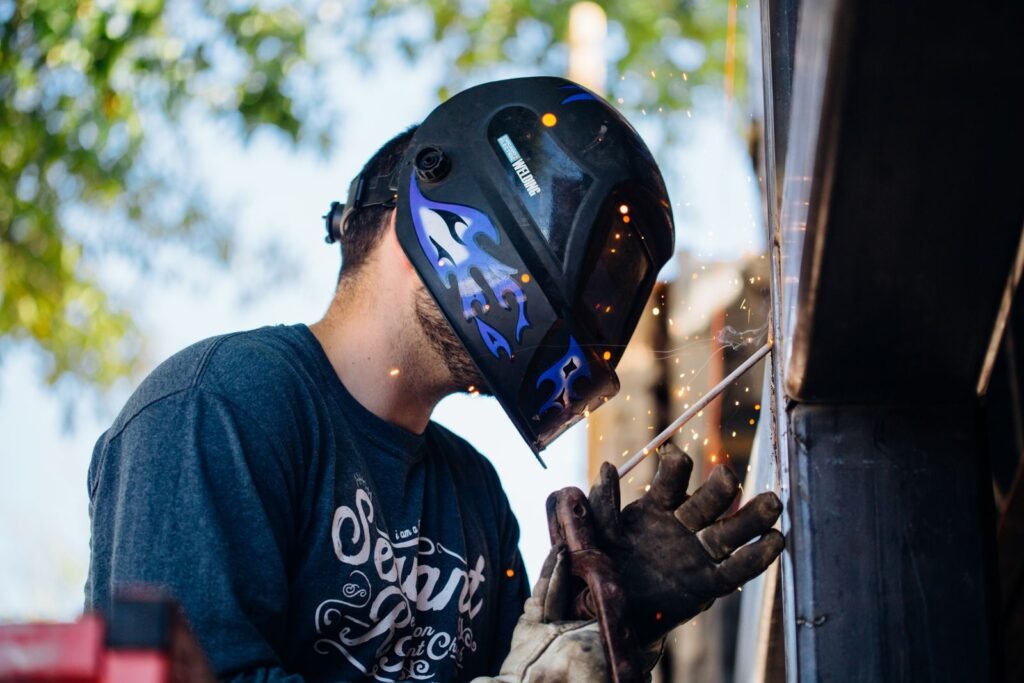
Houston runs on energy, manufacturing and construction, and all three need welders. If you weld and you are looking at Texas in 2026, Houston is one of the strongest single-city markets in the country. Here is what to know before you apply.
Pay benchmark
The US Bureau of Labor Statistics reports a national median annual wage of $51,000 for welders, cutters, solderers and brazers (OEWS, May 2024). Houston pay varies by industry: energy and industrial work often pays above the national median, while general fabrication can sit near or below it, and overtime changes the picture a lot. Use $51,000 as your anchor and compare real offers against it, not against a headline on a job ad. Our USA and Canada salary hub has the full BLS table for welders and other trades.
Certifications employers actually ask for
A recognised welding certification matters more in Houston than a long CV. Employers commonly look for AWS-based qualifications and procedure-specific tests, and many industrial sites require their own weld test before you start, whatever certificates you hold. Keep your certifications current and documented, and be ready to test on site. Safety training records also help: industrial employers take them seriously, and a complete file speeds up hiring.
The honest note on sponsorship
As with trucking, most welding roles are rarely sponsored for a US work visa, because the common skilled-work routes do not fit the occupation well. If someone promises a guaranteed sponsored welding job in Houston for a large upfront fee, walk away. Assume you need existing US work authorisation unless an employer and an immigration lawyer both confirm otherwise in writing.
Applying well
Target employers directly — energy contractors, fabricators and shipyards around the Houston area — as well as job boards. A one-page resume listing your processes, materials, certifications and industries beats a long generic CV. If you are new, look for apprenticeship-style routes with employers rather than paying an agent for placement.